2.1 DES预处理反应温度对木质素的影响
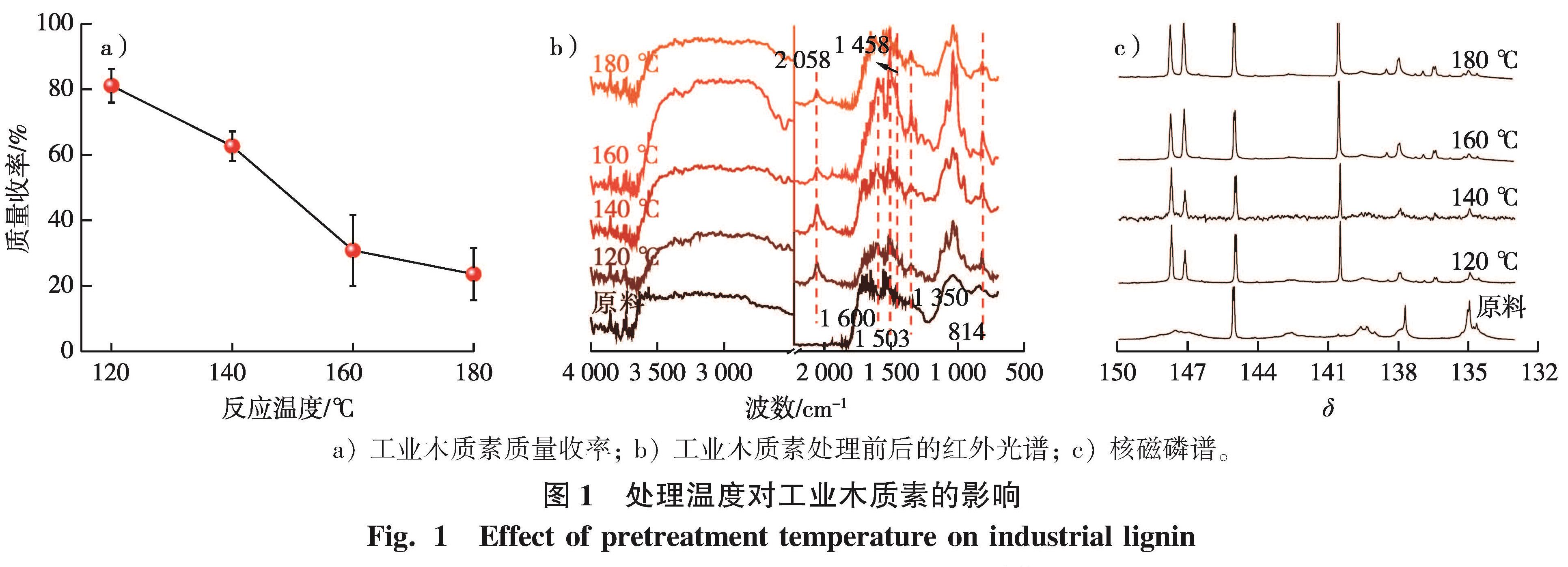
反应温度对DES预处理木质素的溶解、结构解离及改性具有显著影响,结果如图1a所示。随着反应温度从120 ℃逐步升高至180 ℃,木质素产物的质量呈现先增加后降低的趋势。在120 ℃时,木质素质量收率高达81.07%,可能是由于碱性DES体系在低温条件下主要通过氢键作用促进胺基引入木质素侧链,而此时木质素的主要化学键尚未发生大规模断裂。随着温度升高至160 ℃,木质素的质量收率下降至30.82%,然而,当温度进一步升高至180 ℃,质量收率显著下降至23.57%,说明高温条件下木质素在乙二胺/氯化胆碱DES体系溶剂中进一步解聚成碎片甚至是芳香单体。
工业木质素处理前后的红外表征(图1b)结果显示,3 200~3 700 cm-1处的宽峰归因于羟基的伸缩振动,1 268 cm-1处的峰归因于酚羟基C—O键的伸缩振动,1 350 cm-1处的峰可能是O—H变形和C—O伸缩振动相互作用,或者木质素中酚羟基邻位C—H弯曲振动。此外,1 050 cm-1的峰可能对应于脂肪族伯醇的C—O伸缩振动或芳香醚的伸缩振动,随着温度升高,其峰强度逐渐增强。苯环骨架振动(1 450,1 500和1 600 cm-1)信号稳定,表明木质素芳香结构在温和条件下保持较好的稳定性[15]。然而,在2 054 cm-1处的峰在120 ℃处理的木质素中显著增强,推测可能是DES体系中乙二胺脱氢生成亚胺中间体,并进一步引入木质素结构,形成新的含氮官能团。此外,956,1 000和1 648 cm-1处的峰可能归因于脂肪C=C键的伸缩振动,对应于木质素改性后侧链的复杂长链结构,而810 cm-1处的峰可能与R2C=CHR不饱和结构相关。结合谱图特征,可以进一步印证在低温阶段,DES主要通过氢键作用促进胺基引入,而在高温阶段,木质素发生部分缩合和解聚。
图1 处理温度对工业木质素的影响
Fig.1 Effect of pretreatment temperature on industrial lignin
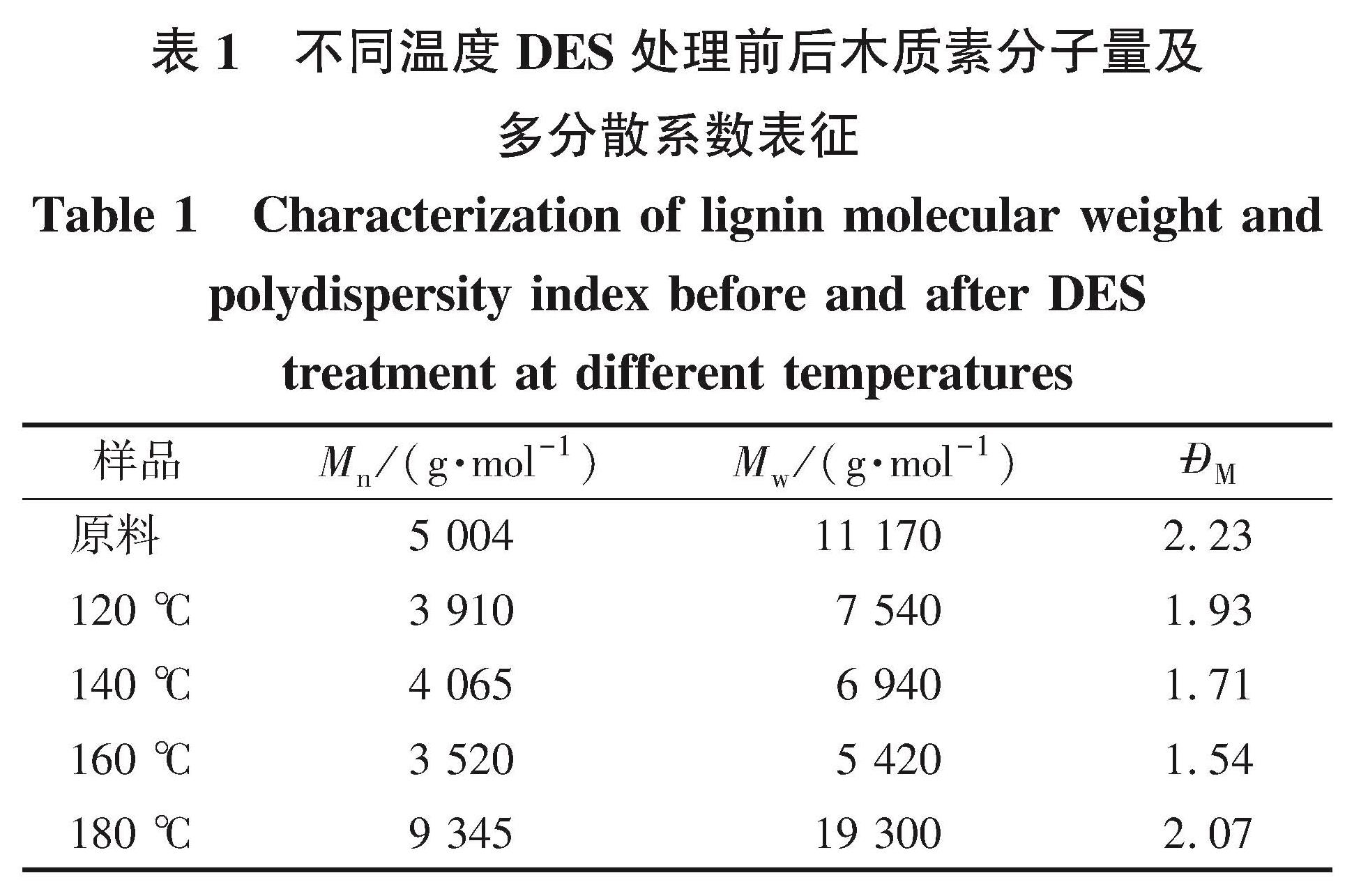
通过渗透色谱技术分析了处理前后木质素的重均分子量(Mw)、数均分子量(Mn)及多分散系数( )。采用氢氧化钠水溶液作为溶剂,2.42 g/L 三羟甲基氨基甲烷与570 μL/L乙酸作为流动相,相较于传统的四氢呋喃流动相,能够更高效地溶解工业木质素,从而更全面地描述其分子量特征。如表1所示,原料碱木质素的Mw为11 170 g/mol,
 为2.23。经120 ℃ DES预处理后,木质素的Mw迅速从11 170 g/mol降低至7 540 g/mol,
 也降低至1.93,表明DES预处理能够有效解离木质素,降低其异质性。随着处理温度进一步升高至160 ℃,Mw进一步降至5 420 g/mol,
 也降至1.54,说明温度的升高促进了木质素的解聚,导致分子量进一步降低,同时异质性也有所降低,这为后续的改性利用提供了有利条件。然而,当温度进一步提高时,碱木质素的Mw反而升高至19 300 g/mol,超过了原料的分子量,这可能是由于解聚过程中产生的低聚物在高温下发生了缩合反应。
表1 不同温度DES处理前后木质素分子量及多分散系数表征
Table 1 Characterization of lignin molecular weight and polydispersity index before and after DES treatment at different temperatures
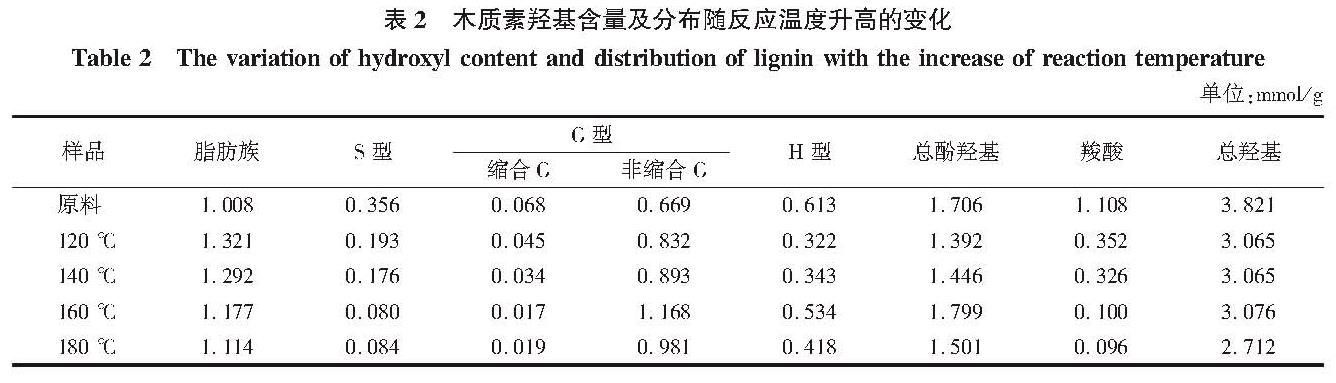
31P NMR数据进一步揭示了木质素羟基含量的变化趋势[8],结果如图1c和表2所示。预处理后残渣样品中存在两个明显脂肪族羟基的峰,可能其中一个峰是来自DES中某一组分。在低温条件(120~140 ℃)下,脂肪族羟基含量显著提高,推测是由于木质素缩合结构的部分解构,从而生成更多脂肪族羟基。同时,紫丁香基型(S型)和对羟基苯基型(H型)酚羟基含量降低,而非缩合愈创木基型(G型)酚羟基含量显著提高,这可能是由于S型和H型结构更容易溶出,使得残渣中G型含量升高[25]。当温度达到160 ℃时,脂肪族羟基含量开始减少,可能是由于温度升高促进了木质素分子间的缩合反应。S型酚羟基继续减少,而G型和H型酚羟基含量逐渐提高,这可能是高温下发生脱甲氧基反应,使得S型结构单元部分转化为G型结构单元,甚至是H型结构单元。值得注意的是,在160 ℃处理后,非缩合G型酚羟基含量相较于原料提高约175%,最终形成S、G、H三者4.45:65.87:29.68的结构单元比例,相比原料的S、G、H三者20.87:43.20:35.93的比例,木质素结构明显含有更多的G型结构单元。然而,在180 ℃时各羟基含量均显著下降,表明过高温度导致了工业木质素易降解的组分溶于溶液中,而只剩缩合难降解的残渣木质素,这降低了改性效果。
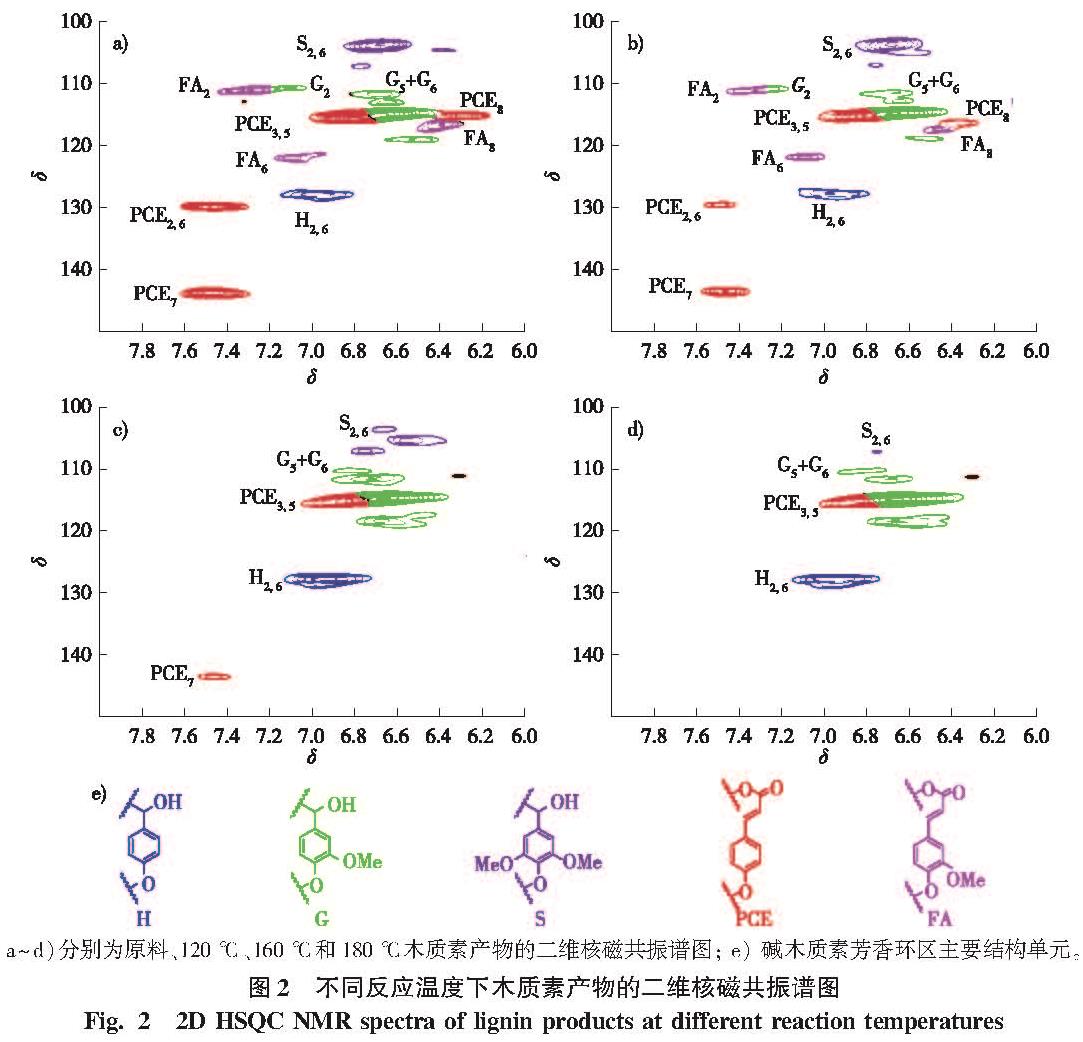
为了进一步探究DES预处理木质素反应前后化学结构及羟基分布的变化,通过二维核磁共振对木质素原料和不同反应温度(120~180 ℃)下的木质素产物进行了分析(图2)。如图2所示,二维核磁谱图随反应温度升高的变化与磷谱数据显示的木质素产物羟基含量及分布的趋势基本保持一致。木质素原料中主要包含δ 103.7~104.1/6.59~6.78(S2,6),δ 110.1~110.9/7.02~7.13(G2),δ 114.8~116/6.71~6.8(G5),δ 127.8~128.8/7.05~7.17(H2,6),δ 129.3~130.2/7.48(PCE2,6),δ 144.8/7.51(PCE7),δ 113.9~117.4/6.29~6.33(PCE8),δ 110.7/7.35(FA2),δ 123.1/7.20(FA6)及δ 114.9/6.38(FA8)。其中,PCE代表对香酸豆酯结构,FA代表阿魏酸。
表2 木质素羟基含量及分布随反应温度升高的变化
Table 2 The variation of hydroxyl content and distribution of lignin with the increase of reaction temperature 单位:mmol/g
图2 不同反应温度下木质素产物的二维核磁共振谱图
Fig.2 2D HSQC NMR spectra of lignin products at different reaction temperatures
在低温条件(120 ℃)下,羟基分布及含量变化并不十分明显。但随着温度上升到160 ℃,S型酚羟基强度大幅降低,H型酚羟基强度略微提升,而G型酚羟基强度显著增强,同时大部分PCE及FA结构发生转化; 以上结果说明DES预处理过程中发生了脱甲氧基反应和PCE及FA结构中的脱羰反应等。G型酚羟基强度的提升也佐证了磷谱数据的变化趋势。而当温度进一步提升到180 ℃,相对于160 ℃羟基含量变化幅度较小,此时由于高温,小部分的羟基缩聚使得其含量下降。
综合来看,反应温度通过调控木质素的结构演变主导了其改性过程。在低温阶段(120~140 ℃),DES体系主要通过氢键作用促进胺基引入,脂肪族羟基含量显著增加(120 ℃时增幅达32.8%)。随着温度升高至160 ℃,发生脱甲氧基反应,非缩合G型酚羟基占比从原料的43.2%提升至65.87%。同时,FT-IR显示3 200~3 700 cm-1处的羟基伸缩振动显著增强,31P NMR中G型信号也显著增强。然而,当温度升至180 ℃时,溶解和解聚作用占主导,只剩难降解的缩合组分沉淀(FT-IR中芳环骨架振动信号减弱),酚羟基缩合使总酚羟基含量相较于160 ℃时下降16.7%,同时质量收率骤降,说明高温条件下改性效果受到抑制。因此,160 ℃是DES预处理木质素的最优温度条件,能够实现较高的改性效率,同时避免过度降解带来的活性官能团损失。
2.2 DES预处理反应时间对木质素的影响
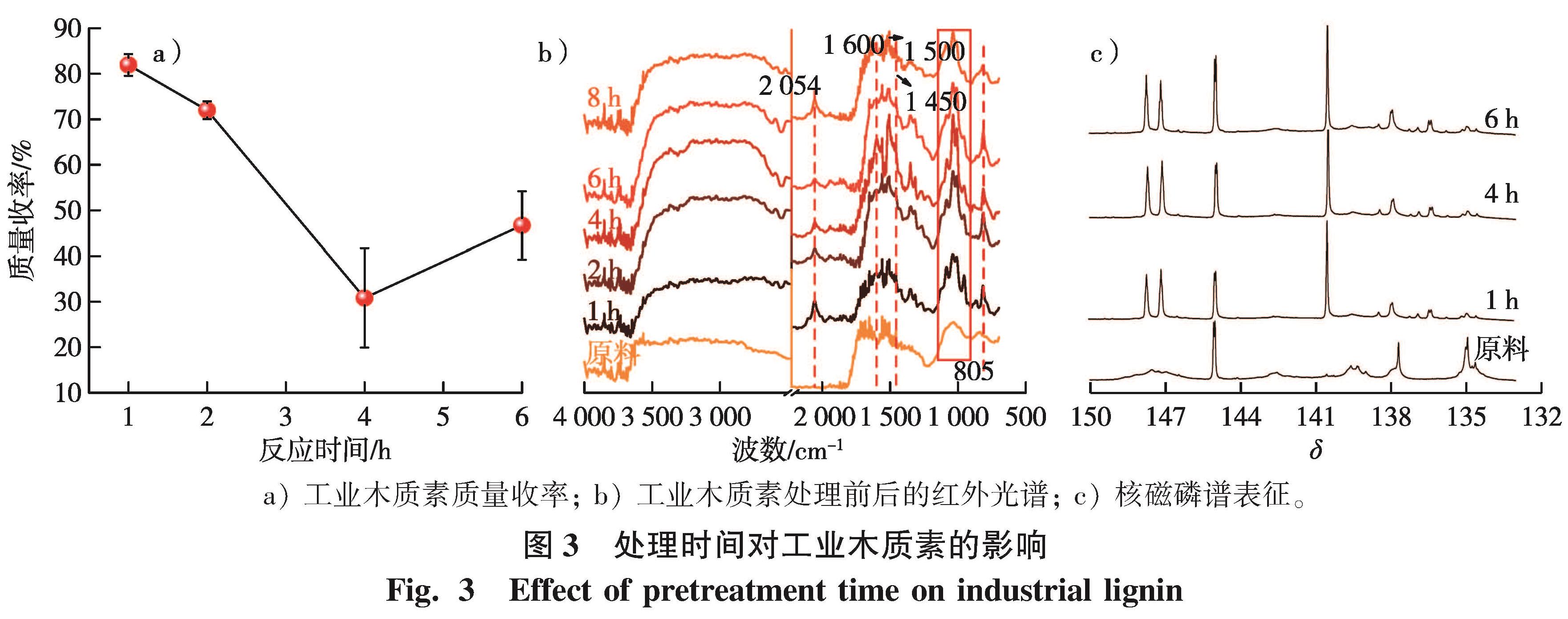
反应时间对DES预处理木质素的溶解和改性起着关键作用。结果显示,随着反应时间从1 h延长至8 h,木质素的质量收率呈现先显著增加后急速降低并趋于稳定的趋势(图3a)。在1 h反应时间内,木质素质量收率高达81.93%,推测是由于DES体系在短时间内通过氢键作用与木质素充分相互作用,同时大量胺类化合物引入木质素结构,导致产物质量显著增加。然而,随着反应时间延长至4 h,质量收率下降至30.82%,并在6 h时增加至46.71%。这一趋势表明,在反应初期(0~4 h),DES体系主要通过胺基引入和氢键作用促进木质素的溶胀与改性,而在后期(6 h),木质素缩聚加剧,使质量收率不降反增。FT-IR谱图(图3b)显示,不同反应时间下的木质素变化趋势与温度对木质素结构的影响相似。初期(1 h),木质素羟基的信号较弱,与原料相比无明显增加,可能由于反应时间过短,DES主要通过胺基引入而未能显著破坏木质素的结构。2 h后,图3b中3 200~3 700 cm-1处的羟基振动增强,表明羟基含量增加,并在4~6 h时趋于稳定。此外,1 050 cm-1处的峰可能对应于脂肪族伯醇的C—O伸缩振动或芳香醚的伸缩振动,随着反应时间的延长,信号逐渐增强。然而,当反应时间进一步延长至8 h,羟基信号出现下降,推测是由于木质素发生缩合反应,使酚羟基含量减少,影响木质素的化学活性。
图3 处理时间对工业木质素的影响
Fig.3 Effect of pretreatment time on industrial lignin
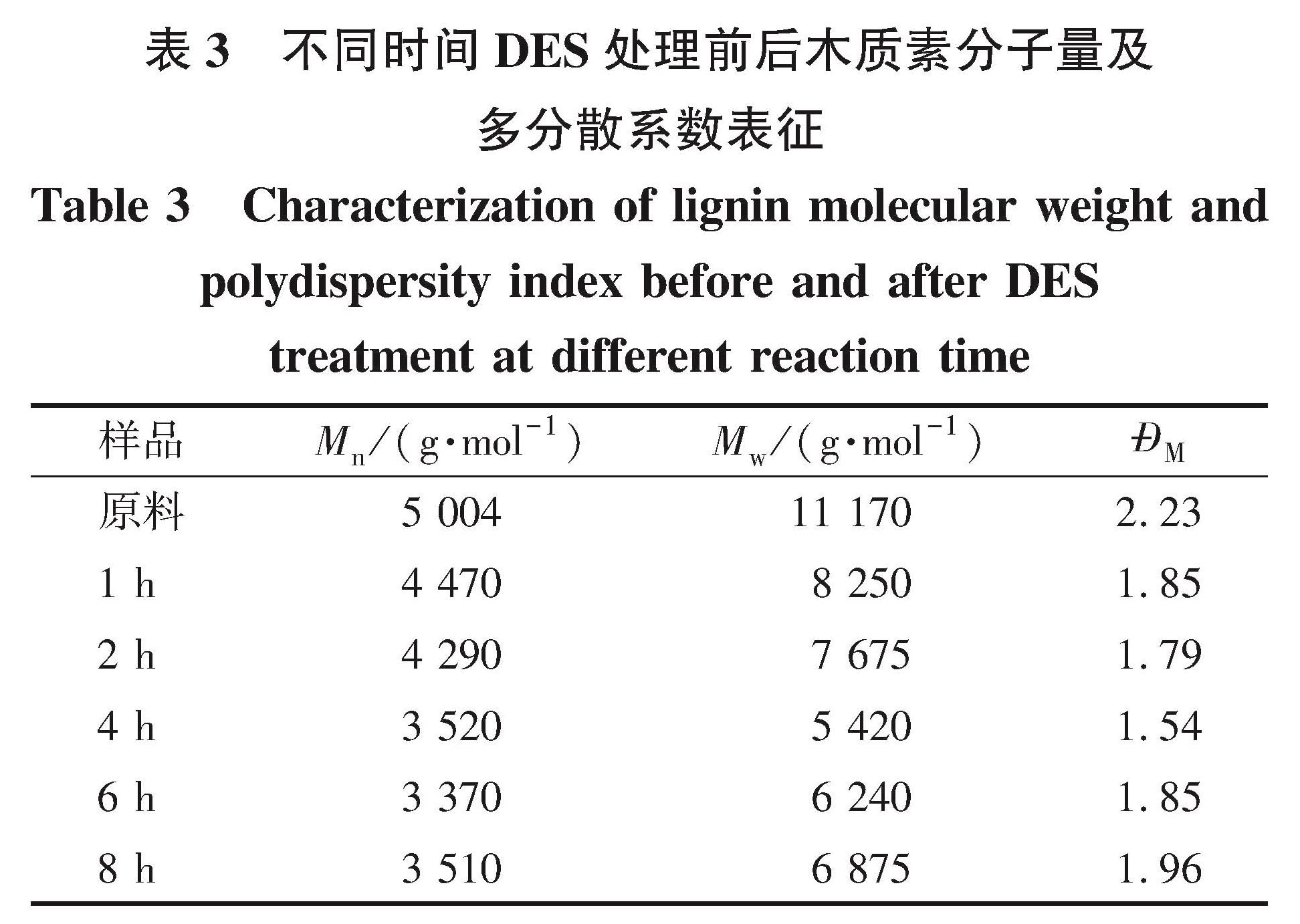
通过对不同时间DES处理前后的碱木质素进行分子量表征,发现随着处理时间的延长,木质素的分子量逐渐降低(表3)。在DES处理过程中,碱木质素发生了解聚,解聚反应生成了更多的羟基, 这一变化与红外光谱分析的结果一致。当反应时间达到4 h时,Mw降至最低值5 420 g/mol,-DM也降至最低值1.54。然而,随着反应时间的进一步延长,分子量开始回升。当反应时间达到8 h时,Mw升至6 875 g/mol,表明延长处理时间可能导致过程中生成的活性羟基与木质素发生缩合反应,从而不利于后续工业木质素的改性。
表3 不同时间DES处理前后木质素分子量及多分散系数表征
Table 3 Characterization of lignin molecular weight and polydispersity index before and after DES treatment at different reaction time
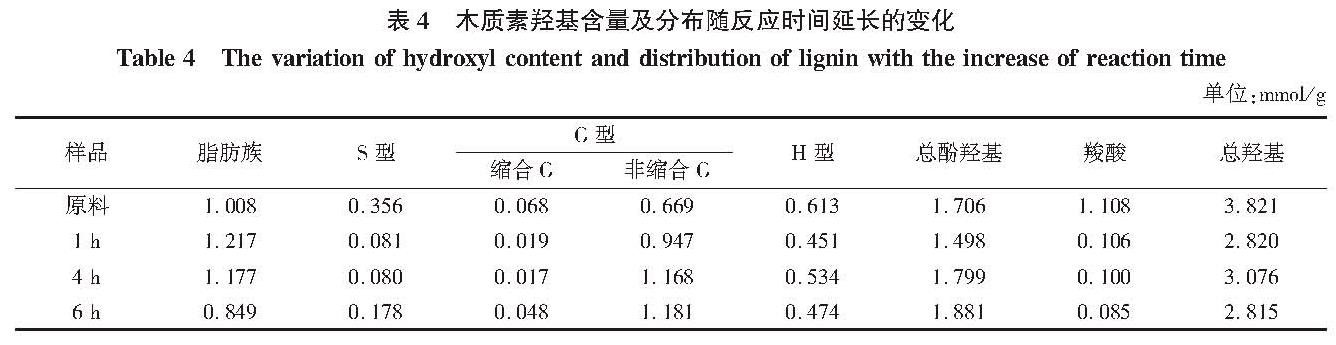
在短时间反应(1 h)下,木质素的脂肪族羟基含量显著提高,与低温反应条件下的变化趋势相似(图3c和表4)。同时,S型和H型酚羟基含量下降,而非缩合G型酚羟基含量显著增加,这可能是S型结构单元和H型结构单元相较于G型结构单元更易溶出。当反应时间延长至4 h,脂肪族羟基含量开始减少,可能是由于缩合反应的发生。此外,S型酚羟基持续降低,而G型和H型酚羟基含量增加,说明脱甲氧基反应发生。当反应时间进一步延长至6 h,非缩合G型酚羟基含量较4 h无明显变化,而脂肪族羟基含量进一步降低,S型酚羟基含量略有回升,H型酚羟基含量则减少,可能与过度反应导致的副反应相关。
表4 木质素羟基含量及分布随反应时间延长的变化
Table 4 The variation of hydroxyl content and distribution of lignin with the increase of reaction time 单位:mmol/g
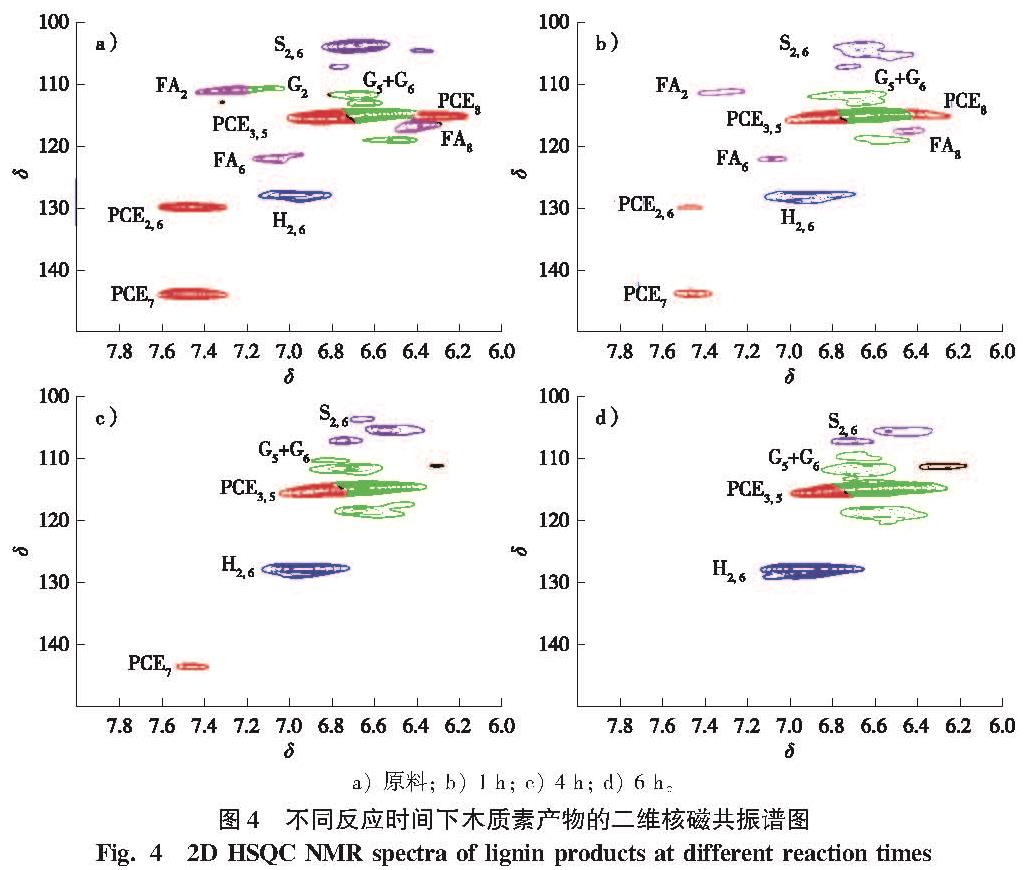
为了进一步探究DES预处理木质素反应前后化学结构及羟基分布的变化,通过二维核磁共振对木质素原料和不同反应时间(1~6 h)下的木质素产物进行了分析(图4)。如图4所示,二维核磁谱图随反应时间延长的变化与磷谱数据显示的木质素产物羟基含量及分布的趋势基本保持一致。
图4 不同反应时间下木质素产物的二维核磁共振谱图
Fig.4 2D HSQC NMR spectra of lignin products at different reaction times
木质素原料中主要包含δ 103.7~104.1/6.59~6.78(S2,6),δ 110.1~110.9/7.02~7.13(G2),δ 114.8~116/6.71~6.8(G5),δ 127.8~128.8/7.05~7.17(H2,6),δ 129.3~130.2/7.48(PCE2,6),δ 144.8/7.51(PCE7),δ 113.9~117.4/6.29~6.33(PCE8),δ 110.7/7.35(FA2),δ 123.1/7.20(FA6)及δ 114.9/6.38(FA8)。在较短反应时间条件(1 h)下,羟基分布及含量变化相较于低温反应条件更加明显,160 ℃下反应1 h后S型酚羟基信号强度显著下降,G型酚羟基信号强度显著提升,同时大部分PCE及FA结构发生转化。随着反应时间来到4 h,G型酚羟基信号强度进一步增强,H型酚羟基强度趋于稳定。6 h反应时间后酚羟基分布及含量趋于稳定。以上结果说明DES预处理过程中,在160 ℃下反应初期即发生了脱甲氧基反应和PCE及FA结构中的脱羰反应等。G型酚羟基强度的提升同时佐证了磷谱数据的变化趋势。而当时间进一步来到4~6 h,相对于1 h,G型酚羟基信号强度进一步提升并趋于稳定。
综合来看,反应时间决定了木质素的活化、降解及平衡过程。在初期(0~4 h),DES体系通过氢键作用和胺基引入增强木质素的溶解度,同时促进G型结构单元的富集。然而,在4 h之后,反应逐渐进入缩聚阶段,脂肪族羟基含量减少,酚羟基发生缩合,使木质素的改性效果趋于稳定,过长的反应时间反而导致缩合增强。因此,160 ℃反应4 h是优化木质素改性的最优条件,能够平衡木质素的解离、活化及化学稳定性,为其在高性能生物质基材料中的应用提供了有力支持。
2.3 DES预处理含水量对木质素的影响
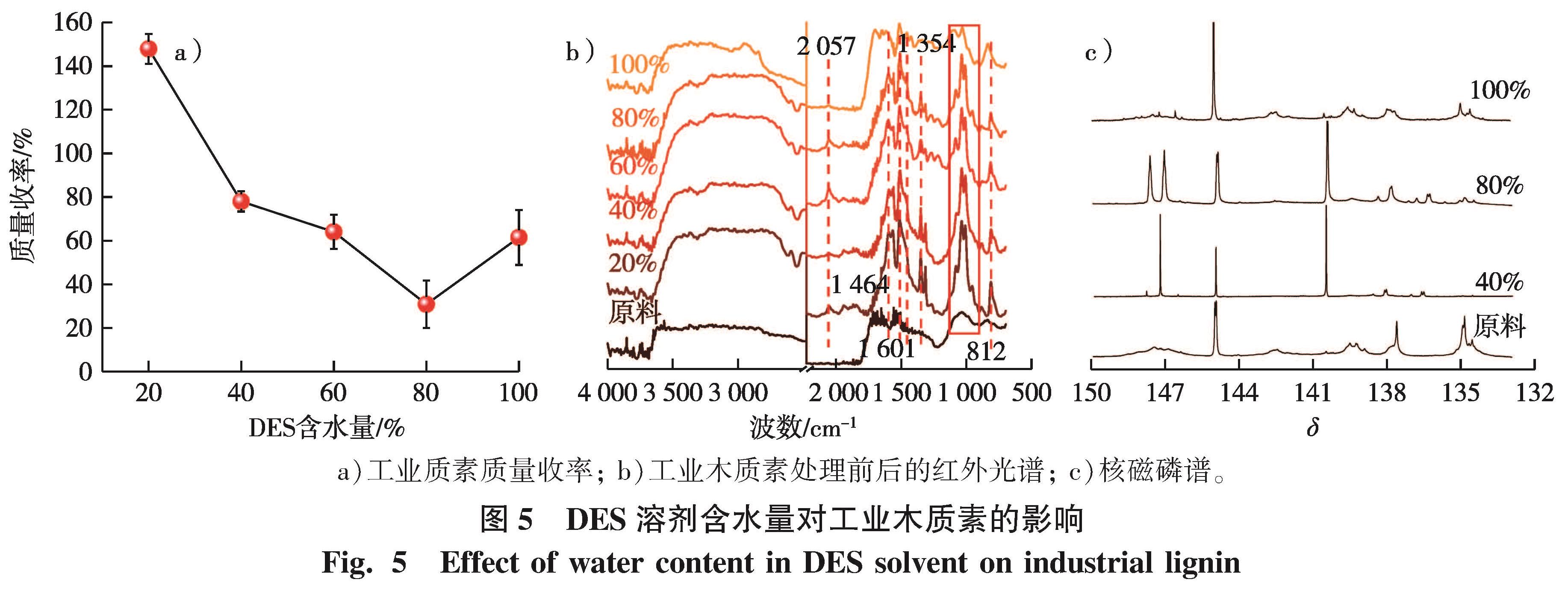
含水量是影响DES预处理效果的关键因素之一,对木质素的溶解度、结构解离及改性均具有显著影响。结果显示,随着含水量从20%逐步增加至100%,木质素质量收率呈现先显著增加后迅速下降并趋于稳定的趋势(图5a)。在低含水量(20%)条件下,木质素质量收率高达147.93%,推测是由于高浓度DES体系与木质素充分接触,氢键作用增强,同时大量胺类基团引入木质素侧链,使产物质量显著增加。然而,当含水量增加至60%时,质量收率下降至64.04%,在80%时进一步降至30.82%。这表明,适量的水能够有效促进木质素解离,提高溶解度,而高浓度DES体系可能抑制木质素的降解,使改性效果受限。当含水量进一步增加至100%,木质素质量收率骤增至61.46%,说明缺乏DES的氢键网络和催化介质,木质素在纯水环境下发生了不可逆的缩合,进而导致了DES预处理效果受限。
图5 DES溶剂含水量对工业木质素的影响
Fig.5 Effect of water content in DES solvent on industrial lignin
FT-IR分析(图5b)显示,含水量变化对木质素官能团的影响趋势与温度和反应时间对木质素结构的影响类似。在20%含水量条件下,木质素羟基信号显著增强,表明高浓度DES体系能够有效促进木质素的改性。然而,随着含水量的增加,3 200~3 700 cm-1处的羟基伸缩振动峰强度趋于稳定,表明40%~80%含水量范围内,反应体系已能够提供足够的改性能力,进一步增加含水量对羟基富集作用影响较小。此外,1 050 cm-1处的峰可能对应于脂肪族伯醇的C—O伸缩振动或芳香醚伸缩振动,随着含水量的增加,其强度逐渐增强。然而,在100%纯水条件下,羟基信号显著下降,推测是木质素在纯水环境下发生了缩合,导致酚羟基含量减少,进一步说明适量DES在改性过程中起到关键作用。
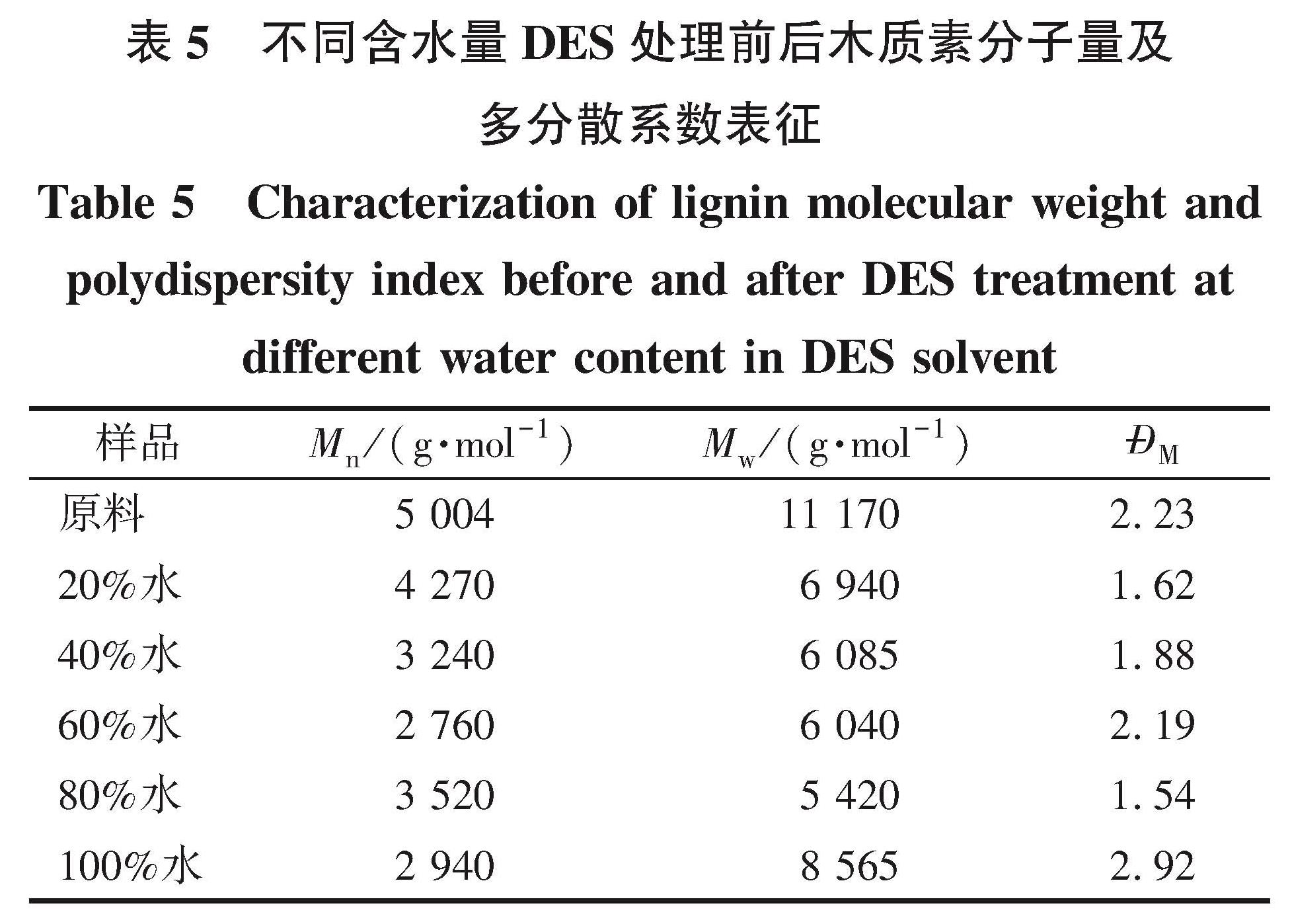
通过进一步表征DES溶液中不同含水量对木质素分子量的影响,发现随着含水量的增加,碱木质素的解聚程度逐渐增强(表5)。在含水量较高的情况下,碱木质素的分子量不断降低,这表明水的增加有利于木质素的解聚。当使用100%纯水作为溶剂时,由于水在160 ℃下发生解离,容易促使碱木质素发生缩合反应,使得分子量升高至8 565 g/mol。该结果与红外光谱表征的结果一致。
表5 不同含水量DES处理前后木质素分子量及多分散系数表征
Table 5 Characterization of lignin molecular weight and polydispersity index before and after DES treatment at different water content in DES solvent
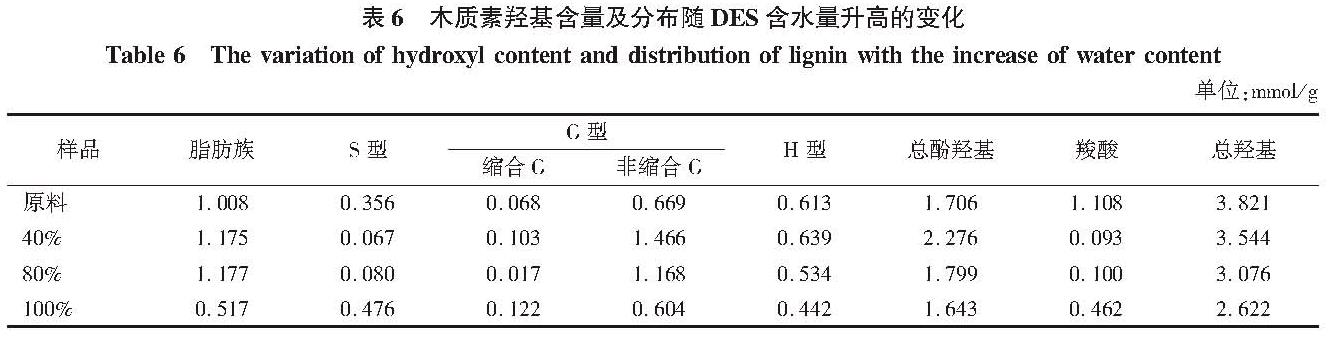
31P NMR分析进一步揭示了含水量对木质素结构的调控作用(表6)。在低含水量条件下,木质素的脂肪族羟基含量显著提高,推测是由于高浓度DES体系能够有效解构木质素缩合结构,释放更多脂肪族羟基。此外,S型酚羟基含量明显降低,而非缩合G型酚羟基含量显著增加,H型酚羟基含量变化不大,表明该条件下S型结构单元更容易溶出并部分发生脱甲氧基反应。这一趋势与160 ℃、4 h的最优反应条件下的结果一致,说明含水量的适当调控对于选择性调节木质素结构至关重要。值得注意的是,在100%纯水条件下,木质素的脂肪族羟基含量下降约50%,缩合G型酚羟基含量显著增加,而非缩合G型和H型木质素羟基含量大幅减少,总羟基含量降低超过30%。这表明在纯水环境下,木质素发生了不可逆的缩合反应,导致化学活性降低,进一步证明了DES在调控木质素结构方面的关键作用。
表6 木质素羟基含量及分布随DES含水量升高的变化
Table 6 The variation of hydroxyl content and distribution of lignin with the increase of water content 单位:mmol/g
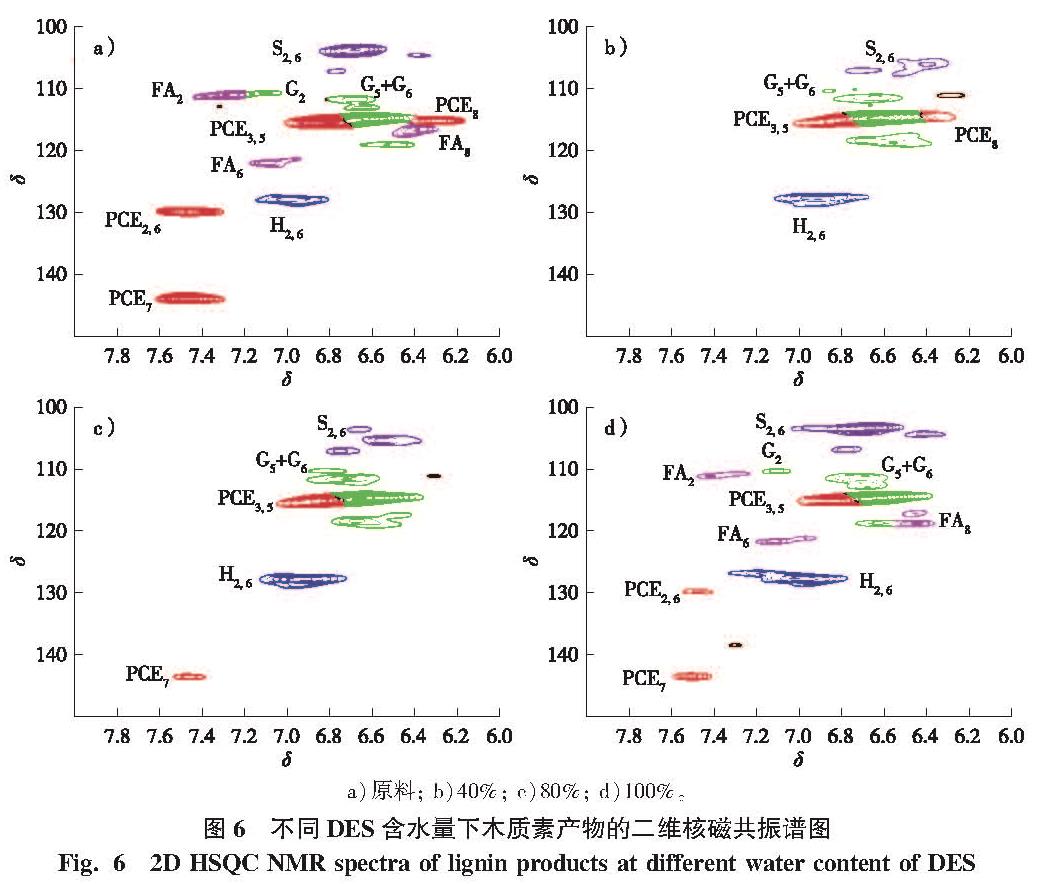
图6 不同DES含水量下木质素产物的二维核磁共振谱图
Fig.6 2D HSQC NMR spectra of lignin products at different water content of DES
为了进一步探究DES预处理木质素反应前后化学结构及羟基分布的变化,通过二维核磁共振对木质素原料和不同DES含水量(40%~100%)预处理下的木质素产物进行了分析(图6)。二维核磁谱图在不同DES含水量预处理下的变化与磷谱数据显示的木质素产物羟基含量及分布的趋势基本保持一致。木质素原料中主要包含δ 103.7~104.1/6.59~6.78(S2,6),δ 110.1~110.9/7.02~7.13(G2),δ 114.8~116/6.71~6.8(G5),δ 127.8~128.8/7.05~7.17(H2,6),δ 129.3~130.2/7.48(PCE2,6),δ 144.8/7.51(PCE7),δ 113.9~117.4/6.29~6.33(PCE8),δ 110.7/7.35(FA2),δ 123.1/7.20(FA6)及δ 114.9/6.38(FA8)。在较低DES含水量条件(40%)下,羟基分布及含量变化相较于上文中低温和较短反应时间条件更加明显,40%含水量的DES在160 ℃下预处理木质素4 h后,S型酚羟基信号强度显著下降,G型酚羟基信号强度显著提升,而H型酚羟基信号强度变化并不明显,同时大部分PCE及FA结构发生转化。随着DES含水量提高至80%,G型与H型酚羟基信号强度稍有减弱,S型酚羟基强度趋于稳定。值得注意的是,当溶剂改为纯水时,相比于原料而言,S型酚羟基信号强度提升,G型和H型酚羟基信号强度下降。以上结果说明DES预处理过程中,以40%含水量的DES为溶剂时,在160 ℃下预处理木质素4 h即发生了脱甲氧基反应和PCE及FA结构中的脱羰反应等。G型酚羟基强度的提升同时佐证了磷谱数据的变化趋势。而当以纯水为溶剂时,由于缺少DES的氢键效应和胺基,木质素缩合加剧,使G型和H型酚羟基含量大幅下降,同时PCE及FA结构也保留了一部分,可能是DES组分对脱羰反应也有一定的促进作用。
综合来看,含水量通过调节DES体系的溶解能力和化学作用主导木质素的结构演变。低含水量(20%~40%)条件下,由于DES浓度较高,较强的氢键作用使木质素质量增加,增强了木质素的结构复杂性。80%含水量条件下G型木质素占比最高,结构调控效果最优。然而,在100%纯水条件下,木质素发生严重缩合,官能团减少,改性效果受限。因此,160 ℃和80%含水量预处理条件是优化木质素改性的最优条件,能够实现较高的溶解度、改性及较好的化学稳定性,为木质素在高性能生物质基材料中的应用提供有力支持。